
Ideal Home Humidity: What Percentage to Keep
The ideal home humidity is one range that covers almost everything: 30 to 50% relative humidity. Below it the air is dry and uncomfortable; above 60% mold grows. Here is where those numbers come from, what happens at each level, and why holding them is harder in Florida than anywhere else.
The short version: the EPA recommends keeping indoor humidity below 60%, and ideally between 30 and 50%. That window is where it all lines up at once, comfort, easy breathing, and no mold or dust mites. If you want a single number to remember, aim for about 45%.
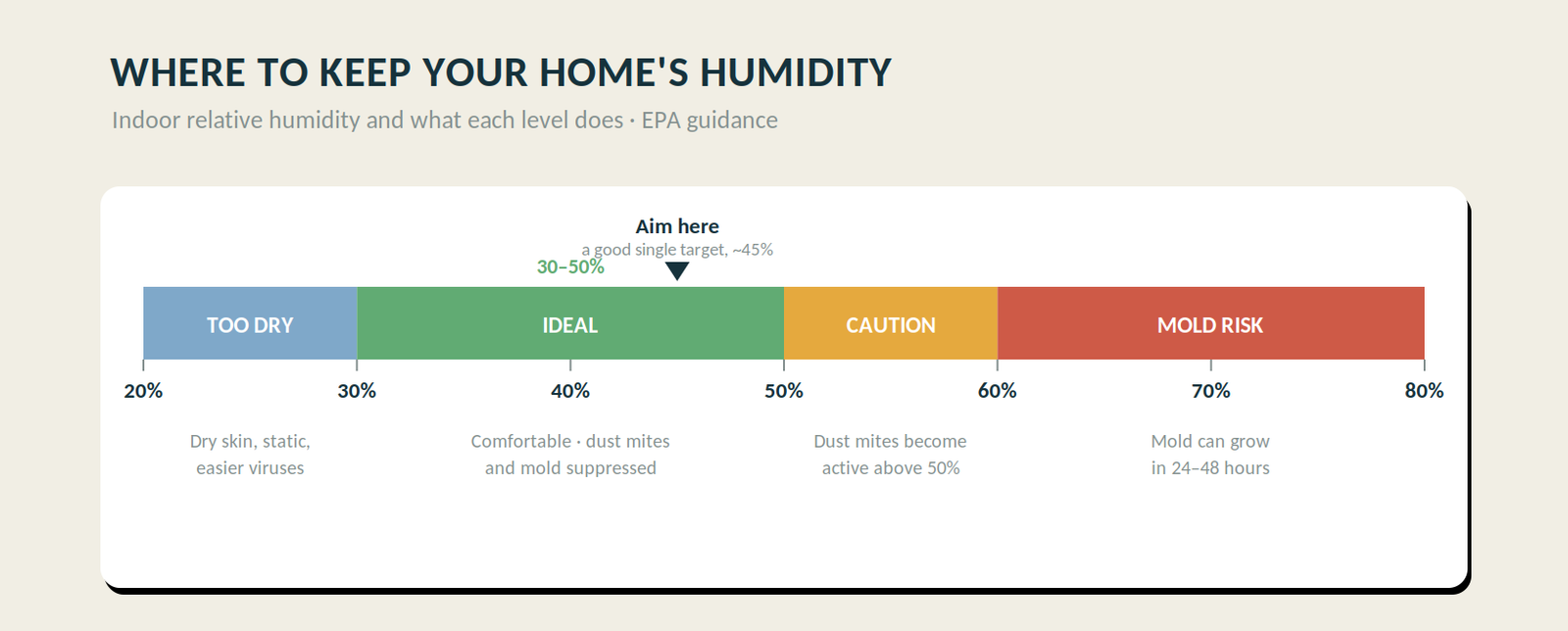
Reading the Scale
Each stretch of the scale has its own consequences, and they are not made up, there are real thresholds behind them.
Below 30%, too dry. Skin and airways dry out, throats get scratchy, static builds up, and wood furniture and floors shrink. Dry air also makes viruses easier to pass along: the NIH notes that 40 to 60% humidity reduces how long they stay viable in the air. This kind of dryness is a cold-state winter problem, when heating wrings the moisture out of the air.
30 to 50%, the ideal zone. This is where the pests are uncomfortable and the people are not. Dust mites, according to research from Ohio State University, only live and reproduce above 50% humidity; below that they dehydrate and die off. Mold barely grows below 60%. So 30 to 50% is the band where both mites and mold are suppressed and the air still breathes well.
Above 50%, dust mites wake up. Not mold yet, but dust mites, one of the main allergens and asthma triggers, are already multiplying in this zone. So for anyone with allergies or asthma the ceiling is stricter: keep it below 50%.
Above 60%, mold territory. This is the line the EPA draws most clearly. Above 60% humidity, and especially above 70% in warm air (70 to 90°F), mold germinates on damp organic material within 24 to 48 hours. Dust mites and bacteria thrive alongside it.
One Number, If You’re in a Hurry
If you would rather not think in zones, hold it around 45%. That is the middle of the healthy range: low enough to keep mold and mites out, high enough that the air is not parched. If your dehumidifier or humidifier takes a percentage setting, 45% is a good default.
Why It’s Harder in Florida
Here is the difference that flips the whole task around. In cold states a home fights dryness in winter, the air is parched by heating, and people add moisture with a humidifier. In Florida it is the opposite: a home spends most of the year fighting to stay under 50%, because it is humid outside.
The outdoor air carries a high background humidity most of the year, and it presses inward constantly, through doors, windows, and ventilation. So in Florida the “ideal 45 to 50%” does not hold itself the way it does up north in spring, it takes active work: air conditioning and a dehumidifier holding the line for months. For how strong that outdoor push is in your own city, I broke it down across five cities in the Florida humidity data, from Key West, where the air never lets go, to Jacksonville with a real dry winter.
Measure It First, Don’t Guess
Almost no one can name the humidity in their own home by feel, and the misses usually run high. Before you change anything, get a hygrometer: a digital humidity gauge costs a couple of dollars and shows you the real figure. Put it in the room where you spend the most time, away from the kitchen and bathroom, and watch it for a day or two. That same number tells you which level you are on the scale above, and whether you need a dehumidifier at all.
How to Hold the Range
If your humidity sits consistently above 50 to 60%, here is what works, in order:
- Air conditioning and a dehumidifier. In Florida these are the workhorses. The AC dries the air as a side effect, but in the most humid season it is not enough on its own and you need a dedicated dehumidifier. For what size, the dehumidifier size calculator works it out.
- The moisture source first. A leak, condensation on pipes, water under the house, no appliance will outrun that. Fix the cause first.
- Ventilate the wet rooms. Bathroom and kitchen exhaust fans clear the moisture spikes from showering and cooking before they spread through the house.
The goal everywhere is the same, bring the air back into the green band and keep it there. If humidity has already started mold, that is a separate conversation: whether you can handle it yourself or need a specialist.
Frequently Asked Questions
What is the ideal humidity for a home?
Between 30 and 50% relative humidity, the EPA’s recommendation. In that range mold and dust mites are suppressed and the air is comfortable. A good single setting is about 45%.
Is 60% humidity too high in a house?
Yes, it is the top of the risk range. The EPA advises staying below 60%: above that, mold, dust mites, and bacteria all become significantly more active. Ideally keep it below 50%.
At what humidity does mold grow?
Above 60%, and especially above 70% in warm air. In those conditions mold germinates on damp organic material within 24 to 48 hours. Below 60% its growth largely stops.
How do I measure the humidity in my home?
With a hygrometer, a digital humidity gauge that costs a couple of dollars. Place it in a living area away from the kitchen and bathroom and it shows the real percentage.
Why is it hard to keep humidity low in Florida?
Because the outdoor air is humid nearly year round and presses inward constantly. Unlike northern homes that fight dryness in winter, a Florida home fights to stay below 50%, which takes air conditioning and a dehumidifier.