
Signs of High Humidity in a House: 7 to Watch For
Your home tells you when it is too humid, long before you look at a hygrometer. A musty smell, doors that stick, water on the inside of the glass. Here are seven signs, what each one points to, and what to do about it.
High humidity, consistently above 50 to 60%, leaves marks. You can read them off the house without buying a gauge: the air is sticky, the closet smells damp, a door has stopped closing by August. Below are the seven most common signals. If you recognize two or three, your humidity is almost certainly above the healthy range, and I covered the exact numbers and target in a separate piece on ideal home humidity.
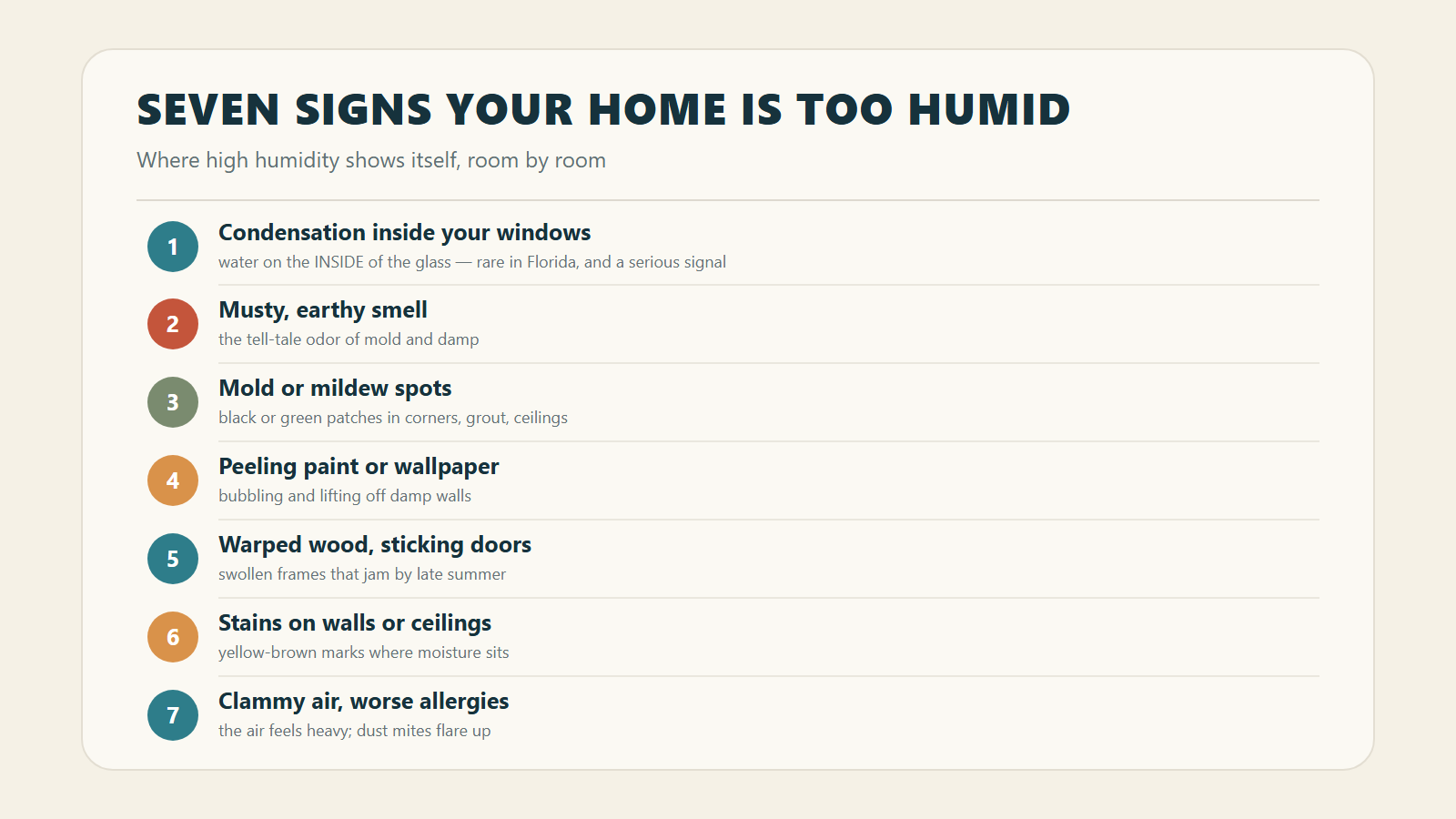
1. Condensation on the inside of windows
First check which side the water is on. In Florida, windows are usually wet on the outside: morning dew on the outer surface of the glass, the same process that wets the grass and the car parked next to it. That is normal, not a sign of trouble. The sun comes out and dries it. The sign of a humid home is water on the inner side: warm, damp room air touches glass cooler than itself and the moisture settles out as droplets. In a home with the AC running this is rare. And that is exactly why it is a serious signal: either the indoor humidity is genuinely high, or a supply vent is blowing straight at the glass and holding a cold spot on it. A quick test is to run a finger across it. Wipes off from the inside: humidity in the house. Wipes off from the outside: dew. Does not wipe off at all: moisture between the panes, a dead seal in the glass unit, not the air in your home. The full split is here: condensation on windows.
2. A musty, earthy smell
That “basement” odor is a reliable sign of damp and mold. It does not smell like dirt but like moisture: it is the smell of the microbes and mold that grow where it is wet. The smell often shows up before any visible spots, and it tells you where to look, in a closet, behind furniture, in the bathroom. Breakdown: a musty smell in the house.
3. Mold or mildew spots
Black, green, or powdery patches in corners, along grout lines, on the ceiling, this is no longer a risk but a result. Per the EPA, above 60% humidity mold grows on damp organic material within 24 to 48 hours. A small patch on a hard surface you can clean yourself; if it has spread or gone into porous materials, here is whether you can handle it yourself or need a specialist.
4. Peeling paint or wallpaper
Bubbling and lifting on the walls, wallpaper coming away, that is moisture under the surface. It works into the wall and pushes the paint off or unsticks the paper from its backing. In Florida the water usually gets into the wall from the outside — sun-heated wet stucco driving moisture inward — or from a leak, not from the room air. More on this: sweating walls.
5. Warped wood and sticking doors
Doors and drawers that stop closing by late summer are a classic of the humid season. Wood absorbs moisture from the air and swells: doors, frames, and floorboards all expand. In the fall, when the air is drier, they settle back. If it repeats every season, the humidity is consistently high. Breakdown: swollen doors and floors.
6. Stains on walls and ceilings
Yellow-brown marks where moisture sits are the trace of steady damp or a slow leak. Unlike a fresh stain from a spill, these bleed through over months and often sit next to mold. If they show up, the move is to find the moisture source, not just repaint over them.
7. Clammy air and worse allergies
The air feels heavy and damp even at a comfortable temperature, and your nose and breathing react more than usual. It is not just the feeling: above 50% humidity dust mites multiply freely, one of the main allergens, and other pests that like damp follow them in. More on this: pests and humidity.
What All the Signs Have in Common
Every one of them points to the same thing: the humidity in the home is above the healthy range, most likely past 60%. The signs are useful for suspecting the problem, but measuring settles it. A cheap hygrometer for a couple of dollars shows the real figure; the goal is to bring the air back to 30 to 50%, as covered in the piece on ideal home humidity.
Why These Are More Common in Florida
Musty closets and swollen doors here are not an anomaly but the background you fight with air conditioning and a dehumidifier: the outdoor air holds high humidity nearly year round and presses inward constantly, so a home has a much harder time staying below 50% than one up north. One clarification: windows wet on the outside in the morning do not belong on this list. That is dew, a normal part of the Florida climate, and it is not a sign of a problem. Only water on the inner side counts. For how strong that push is in your city, see the Florida humidity data.
What to Do About It
The order is simple:
- Find the source first. A leak, condensation on pipes, water under the house, no appliance will outrun that. Cause first.
- Air conditioning and a dehumidifier. The workhorses in Florida. For what size dehumidifier your space and dampness need, the dehumidifier size calculator works it out, and for specific models, the best dehumidifiers for Florida.
- Ventilate the wet rooms. Bathroom and kitchen exhaust fans clear the moisture spikes before they spread through the house.
The goal is one thing, remove the source of the damp and bring humidity back into the healthy range, so the signs clear on their own.
Frequently Asked Questions
How do I know if my home is too humid?
By the tell-tale signs: water on the inside of the windows, a musty smell, mold spots, peeling paint, sticking doors, clammy air. Two or three of them is a near-certain sign humidity is above the healthy range. A hygrometer shows the exact figure.
What humidity counts as high?
Above 50% dust mites start to multiply, and above 60% mold grows, which is the upper limit. The EPA recommends keeping a home at 30 to 50%.
Why do my windows fog up?
Depends on the side. On the outside it is dew: overnight the outer surface of the glass cooled below the dew point of the outdoor air. In Florida that is normal and says nothing about your home. On the inside, moisture from the room air settled on glass cooler than itself; with the AC running that is rare and points to high indoor humidity or a vent blowing straight at the glass. Between the panes, the seal of the glass unit has failed, which has nothing to do with the air in your home.
Are the signs of high humidity dangerous?
They are signals, but real problems sit behind them: mold and dust mites are allergy and asthma triggers, and damp ruins finishes and wood. The sooner you act, the smaller the damage.
Why is indoor humidity so often high in Florida?
The outdoor air is humid nearly year round and presses inward constantly. A Florida home fights to stay below 50%, and without air conditioning and a dehumidifier the signs of high humidity show up fast.