
Sweating Walls: Three Different Problems, Three Fixes
Sweating walls are one complaint hiding three different problems. They get fixed in three different ways, and two of the three cannot be fixed with a dehumidifier at all. So the first step is not buying equipment. It is sorting out which of the three you have.
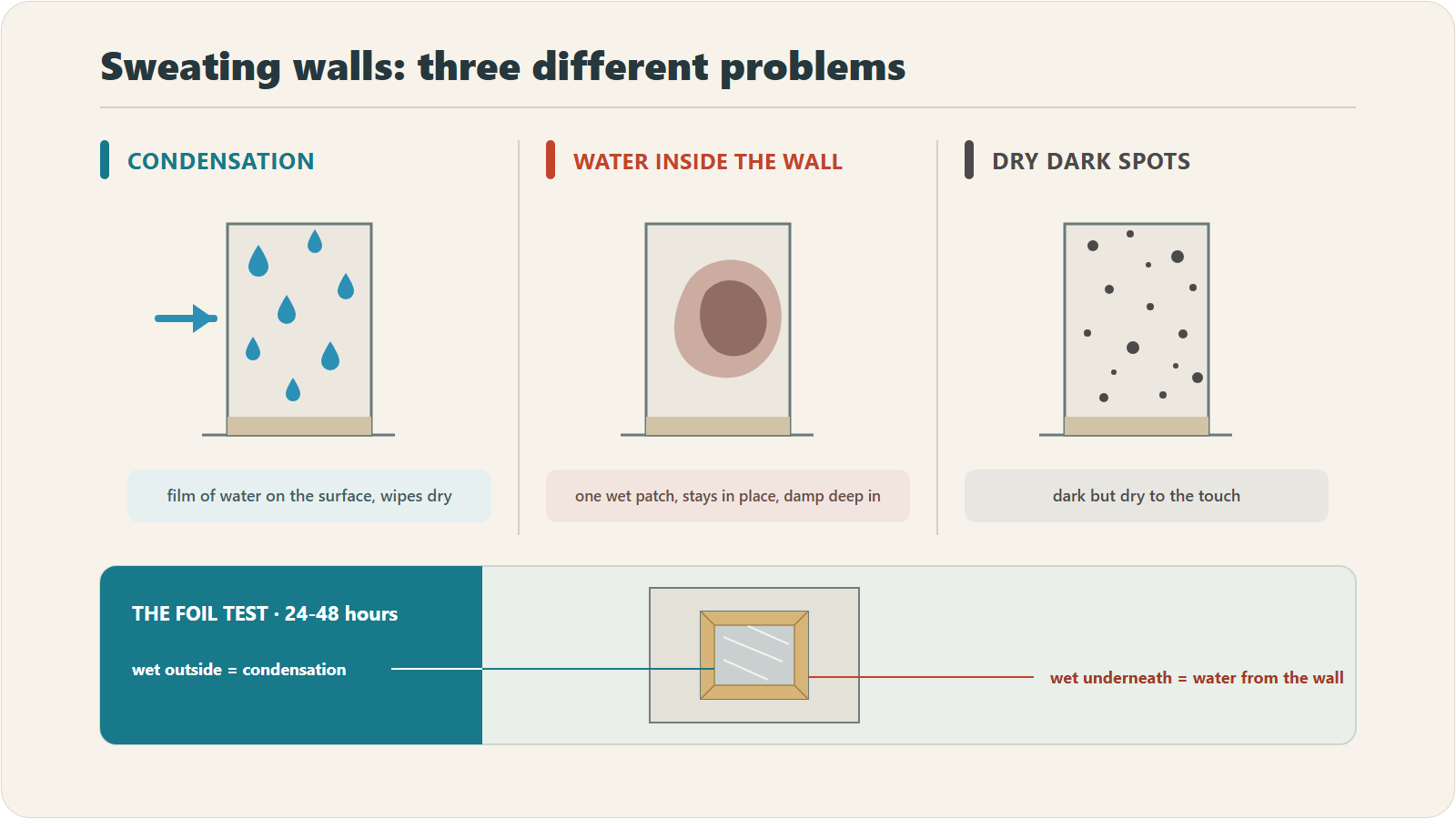
Diagnosis 1: condensation on the surface
The wall really is sweating: moisture from the air lands on a surface colder than the room’s dew point. Same physics as a glass of ice water.
In Florida, that means locally chilled areas. A wall or ceiling that the airflow from a supply vent runs along — supply air comes out at 55–58°F and chills the strip in its path. A room where the thermostat is set very low — there the whole surface runs colder than usual.
How to recognize it: the moisture sits as a film or fine droplets and wipes dry with a towel, and the wall under it is dry. A wide area gets damp, with blurry edges — the whole strip under the airflow, the whole cold corner — not one patch with a sharp outline. It shows up on humid days and during AC hours.
Diagnosis 2: water is coming from inside the wall
This is not sweat, this is a wet patch. The water comes not from the room air but from the wall itself: a leak through the stucco, wicking up from the slab, a pipe inside the wall.
How to recognize it: the patch is local, stays in one place and does not move, and the wall is damp deep in, not just on the surface. It does not care about the day’s humidity — wet in dry weather too. After you wipe it, it comes back to the same spot.
Here the thing not to lose is time: a dehumidifier and thermostat settings will not remove this patch while water keeps feeding the wall. The fix is the source — and the search runs through stucco, roof, and pipes.
Diagnosis 3: the wall is not wet, it is dark
You touch it — dry, but it looks like damp: dark specks, grey-green spots. That is not moisture, that is its aftermath — growth on the surface or ground-in grime. The humid episode already happened; you are looking at its trace. What that dark growth on walls can be and how to read it: black mold signs.
The foil test: sorting for one day and zero dollars
A square of aluminum foil the size of your palm. Tape it to the suspect spot on all four sides, tight. Leave it for 24–48 hours.
Moisture on the room side of the foil — condensation: the water came from the air. Moisture under the foil, on the wall side — the water is coming from the wall. Dry on both sides — there is no moisture at this spot right now, see diagnosis 3.
The test is crude, but it splits the “air or wall” fork cleanly, and that is the decision that matters.
What to do, by diagnosis
Condensation: work on the air. House humidity down — below 60% RH, working range 45–50% RH. If the AC cannot get there on its own, size a dehumidifier to the space: dehumidifier size calculator. Turn the supply vent louvers away from the wall so the airflow stops chilling the strip.
Water from the wall: work on the water. Stucco, roof, pipes — find and repair the source, and that is contractor work. A dehumidifier here only dries the aftermath once the repair is done.
Dry dark spots: drying the air is too late — the job now is the spot itself. What that growth is and how to read it: black mold signs.
And if sweating walls are not the only symptom — doors sticking, a musty smell, condensation somewhere else — look at the whole house picture: signs of high humidity.
FAQ
Why do walls sweat?
Moisture from the air lands on areas colder than the room’s dew point: the strip under a supply vent’s airflow, the walls of an overcooled room. Or it is not sweat at all but water from inside the wall — a different diagnosis.
How do you tell condensation from a leak?
Condensation is a film over a wide area that wipes dry, with a dry wall underneath, showing up on humid days. A leak is one patch in one place, damp deep in, in any weather. The foil test splits them in a day.
How do you do the foil test?
Tape a square of foil to the wall on all four sides and leave it for 24–48 hours. Moisture on the outside of the foil means condensation from the air; moisture underneath means water from the wall.
Are sweating walls a sign of mold?
Not yet, but they are its conditions: a damp surface that stays damp for long stretches. Dry dark spots are the trace of an episode that already happened.
Will a dehumidifier stop sweating walls?
Only for the first diagnosis, when the moisture comes from the air. If water is coming from inside the wall, a dehumidifier will not help — the source gets repaired first.