
AC Not Removing Humidity: Why It’s Cold but Damp
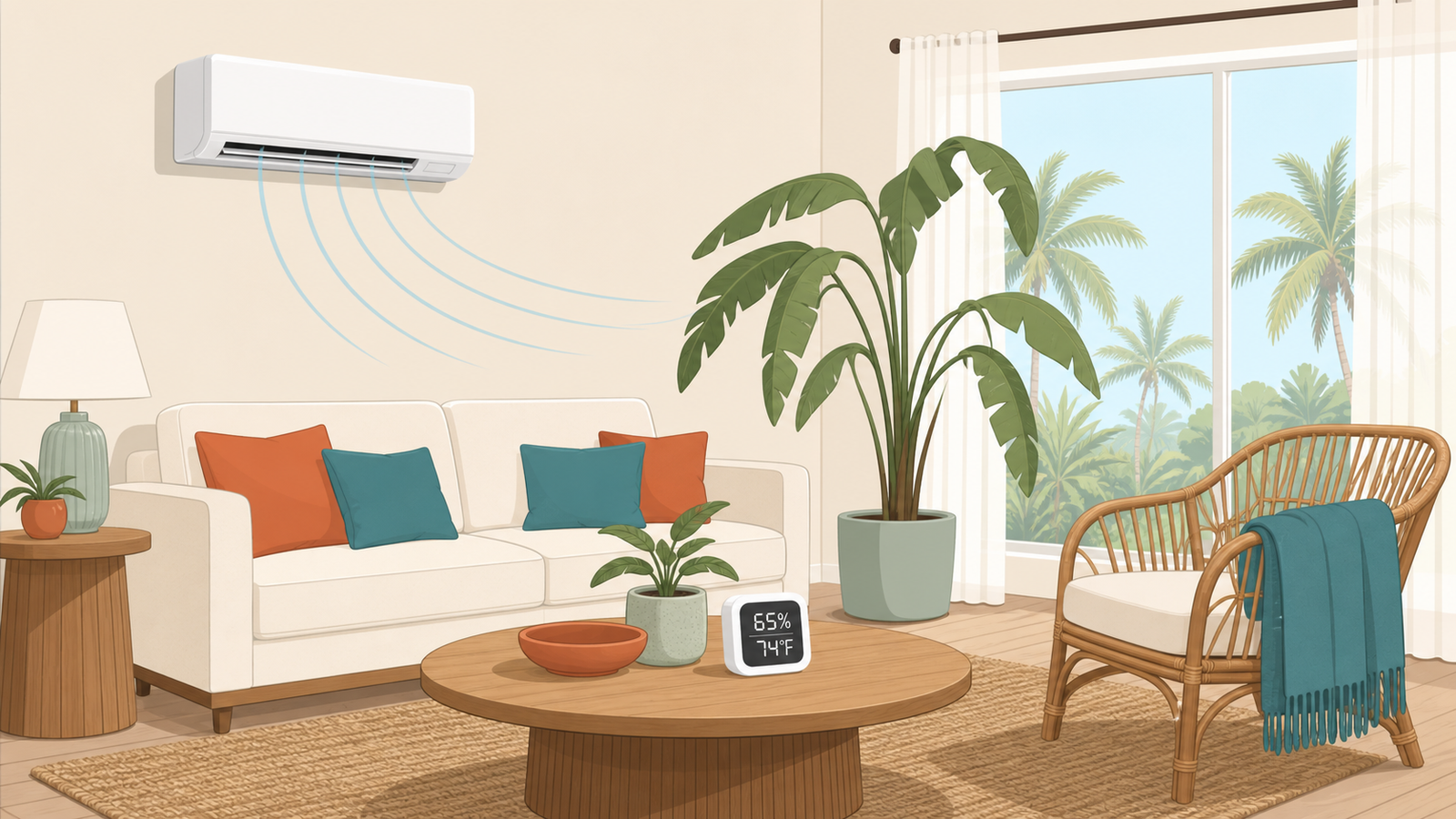
Your AC is running. The room is cool. And the air still feels sticky and damp. That is an AC not removing humidity, and it is usually not a broken unit. Most of the time it is short cycling.
Here is why it happens and how to fix it.
Two jobs at once
Start with something most people never think about. An AC does two jobs at the same time.
First, it cools the air. It drops the temperature, the one your thermostat reads. Second, it dries the air. Warm humid air passes over the cold coil, the moisture condenses on the coil as droplets, runs into the pan, and leaves through the drain. That is built-in dehumidification.
One thing matters here. The drying only works while the AC runs long enough. Water needs time to collect on the coil and drip off. If the unit shuts off too early, it cools the air but does not dry it. Cold, but damp.
Why the house feels cold but clammy
The main cause is simple. The AC is too powerful for the room. It sounds backwards. It is not.
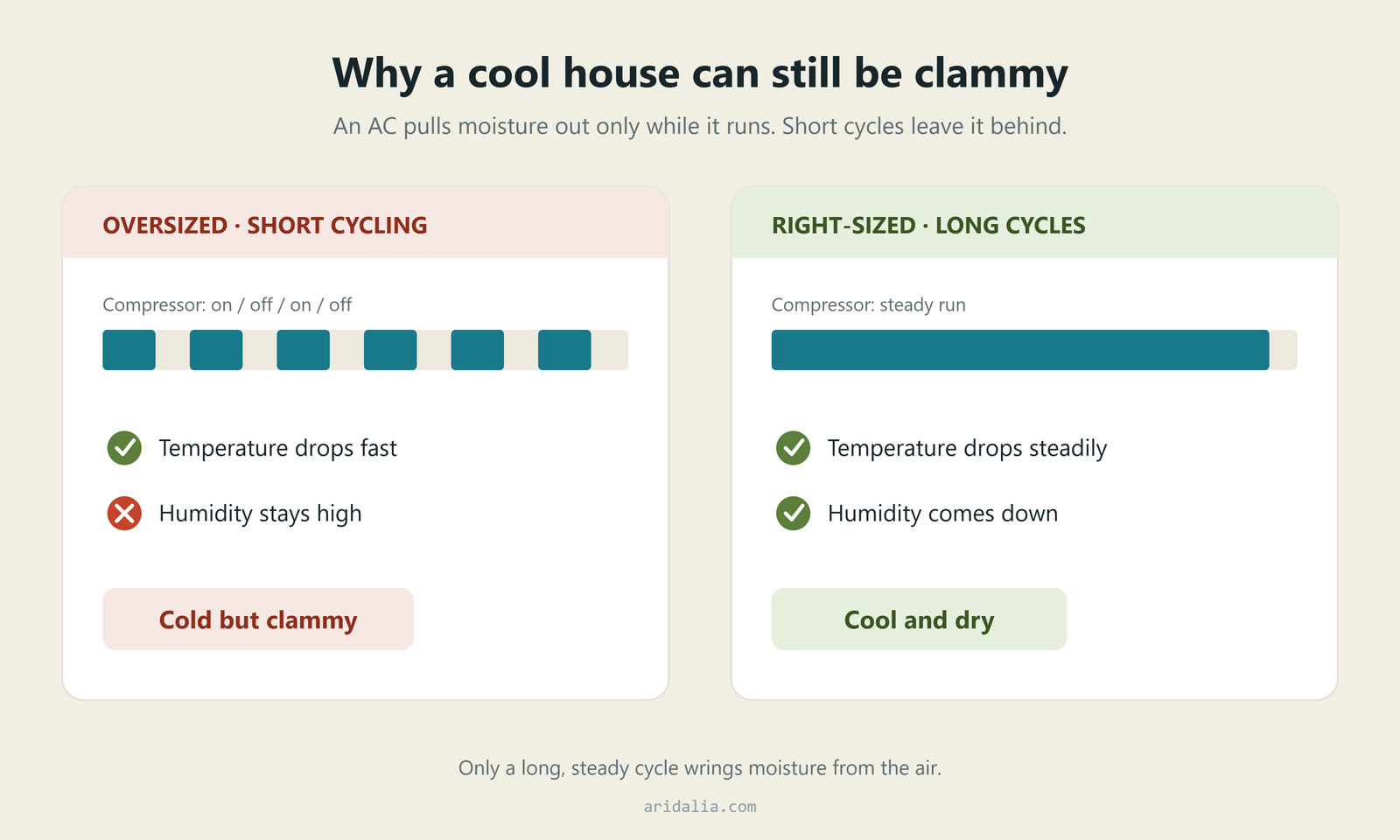
A strong unit cools the air in a few minutes. The thermostat sees the set temperature and cuts the compressor, before the moisture has time to condense and drain. Temperature down, humidity still there. A couple of minutes later the room warms, the unit fires again for a short burst, then cuts out again. This is short cycling: the unit flips on and off every few minutes instead of running steady.
A right-sized AC runs long, even cycles of 20–30 minutes at peak load. In that time the room air passes over the coil several times, the water collects and drains. The long steady cycle is what dries the house. Not the short bursts.
More power does not mean drier air
So the conclusion is against instinct. A more powerful AC dries worse, not better. A smaller, correctly sized unit that runs longer holds the air drier than a big one that blasts cold and quits. A too-big unit is the number one cause of an AC not removing humidity. Plenty of contractors install AC with spare capacity to be safe, and get exactly this: a cold, damp house. The full problem with going too big is a separate read: an oversized AC.
Other reasons your AC will not dry
Short cycling is the big one. It is not the only one. Check these too:
- The fan is set to On instead of Auto. Common mistake. On On, the fan blows all the time, and when the compressor is not cooling, the water sitting on the coil evaporates again and goes back into the house. Set the fan to Auto. Then it runs only during cooling.
- The thermostat is set too high. The AC runs little, in short spells, and never dries.
- Dirty filter, dirty coil, or a clogged drain. Anything that chokes airflow or blocks the water from draining cuts dehumidification. Change the filter, clean the coil.
- Low refrigerant, from a leak or an undercharge. The coil runs warmer, so it pulls less heat and less moisture. The air comes out cool but sticky.
- An old unit that simply cannot carry the load.
A quick way to check
There is a clear sign of short cycling: the drain line is dry while the house is damp. If the AC is really drying, water drips from the drain. That is the moisture off the coil. If the house is humid and nothing runs from the line, and the pan is dry, the coil never gets wet, the moisture never condenses, the unit is quitting too early. A dry drain in a damp house is a near-certain read on short cycling.
Why Florida makes this worse
In a humid climate the AC has to spend a large share of its work just removing moisture, not lowering temperature. HVAC sizing figures put that at 30–40% of capacity going to the moisture load alone in humid conditions. Florida’s latent load is huge, and a unit picked by the cooling number alone cannot carry it. This is the most common reason for an AC not removing humidity in Florida. Swapping an old AC for a new one of the same tonnage often does not fix it here.
The “Dry” mode on mini-splits and smart thermostats helps. It slows the fan so the coil runs colder. But that is a patch, not a cure for an oversized unit. The real fix in Florida is to take the moisture load off the AC with a separate dehumidifier. What size, the dehumidifier size calculator works out. For a whole home, a whole-house dehumidifier ties into the ductwork.
What to do, short
- Set the fan to Auto.
- Change the filter, check the coil and the drain are clean.
- Check the drain: dry while the house is damp means short cycling.
- When you replace, do not buy AC with spare capacity. Buy the right size.
- In season, add a dehumidifier for the moisture load. That is what the AC in Florida does not cover.
The goal is to get the air back to a healthy range near 50%. Cool and dry, not cool and clammy.
Sources: how an AC dehumidifies (sensible and latent cooling), short cycling and oversizing come from the engineering consensus on HVAC (DOE, InterNACHI, Green Building Advisor, manufacturers). Target indoor humidity of 30–50% is from the US EPA. This is reference material, not engineering advice.
FAQ
Why does my AC cool the room but not remove humidity?
Most often it is oversized and short cycling. It cools the air in minutes and shuts off before the moisture can condense on the coil and drain away. Temperature drops, humidity stays.
Can an oversized AC really be the problem?
Yes. A powerful unit reaches the set temperature fast and stops before it dries the air. A correctly sized AC that runs longer, in steady cycles, dries better.
Should the AC fan be set to On or Auto?
Auto. On On, the fan keeps blowing when there is no cooling, so moisture on the coil evaporates back into the house. Auto runs the fan only during cooling.
How do I know if my AC is short cycling?
It switches on and off every few minutes, and the drain line stays dry while the house is damp. A dry drain in a humid house is a reliable sign the coil never gets wet.
Do I need a dehumidifier in Florida if I have AC?
Often yes. An AC dries the air as a side effect, but in the humid season the Florida moisture load is more than it can carry. A separate dehumidifier removes the load the AC misses.